
Ask a young child what they would like to do after school.
The answer is unlikely to be, “Can I do some more learning?”
It is more likely to be:
“Can I play?”
And perhaps we should pay more attention to that answer.
For young children, play is not simply a break from learning. It is one of the main ways they make sense of the world.
When children play, they experiment, imagine, negotiate, make decisions, solve problems, communicate and sometimes fail spectacularly before trying again.
There is a lot happening beneath the surface of what looks like “just play.”
When a Box Becomes a Spaceship
Give a child a cardboard box and you might see a box.
Give it to a child and it could become a spaceship, a house, a shop, a train or almost anything they can imagine.
This kind of pretend play gives children the freedom to create their own possibilities.
They decide what the objects represent, invent stories, take on different roles and adapt when the game changes.
There is no single correct answer.
And that freedom matters.
It gives children opportunities to use imagination and think beyond what is immediately in front of them.
The Playground Is Full of Lessons
Children learn a great deal from playing with other children.
Who gets the first turn?
What happens when two children want the same toy?
How do you join a game that has already started?
What happens when someone changes the rules?
These situations can be difficult.
They can also be incredibly valuable.
Children gradually learn to communicate, negotiate, cooperate, wait, compromise and understand another person’s point of view.
Adults may call these social skills.
Children may simply call it play.
“Let’s Try Again”
Play also gives children something that formal instruction sometimes struggles to provide: a natural reason to keep trying.
A tower falls.
A puzzle doesn’t fit.
A ball misses its target.
A game doesn’t go the way they expected.
The child tries something else.
This cycle of try → notice → change → try again is at the heart of learning.
There may be frustration along the way, but children often continue because they are genuinely interested in what happens next.
That persistence is valuable far beyond childhood.
Moving Is Learning Too
Young children are not designed to spend most of their day sitting still.
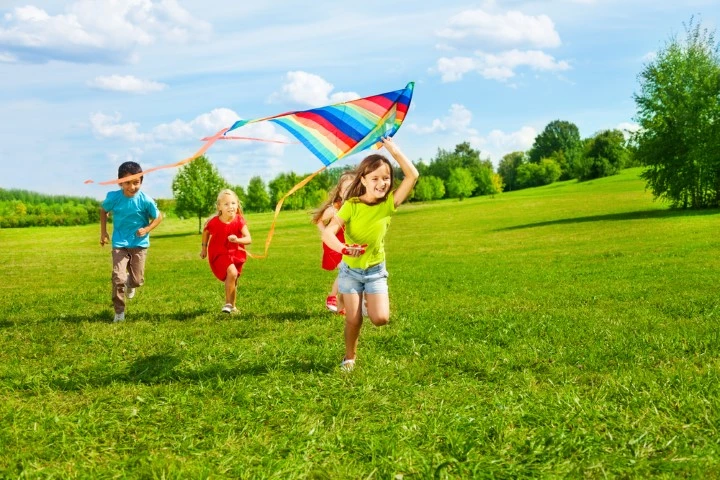
Running, climbing, jumping, balancing, throwing and catching all require children to coordinate their bodies with their surroundings.
Physical play also gives children opportunities to judge distance, manage risk, follow rules and respond to changing situations.
A child climbing a structure is doing more than exercising.
They are constantly making decisions:
“Can I reach that?”
“Where should I put my foot?”
“What happens if I go this way?”
The body and the mind are working together.
Play Doesn’t Always Look Educational
A child stirring pretend soup in a toy kitchen may not appear to be learning anything important.
Neither does a group of children pretending to run a restaurant.
But listen closely.
They are using language.
They are remembering roles.
They are negotiating.
They are counting.
They are solving problems.
They are creating stories.
They are learning how other people think.
This is one of the reasons play can be such a powerful part of early childhood.
The learning is often hidden inside the experience.
Should Adults Join In?
Sometimes.
But not always.
Children also need opportunities to lead their own play.
Adults can provide materials, create safe spaces, ask interesting questions and step in when support is needed.
But there is value in allowing children to decide what happens next.
If an adult constantly takes over, solves every problem, or turns every game into a lesson, the child may have fewer opportunities to make decisions independently.
Sometimes the best thing an adult can say is simply:
“I wonder what you could try next?”
And then wait.
Making Room for Play
As children grow, their schedules can become increasingly crowded with activities designed to help them learn.
But more activities do not necessarily mean more learning.
Children need time to explore without every minute having a predetermined outcome.
They need time to invent games, get things wrong, change their minds, become deeply involved in something, and occasionally even become bored enough to invent something new.
Play deserves a place in childhood not because it makes learning more enjoyable.
Play is part of how young children learn.
And perhaps the next time we see a child completely absorbed in building, pretending, climbing, drawing, running or simply figuring something out, we should pause before asking:
“Are they learning anything?”
They probably are.
We just need to know how to see it.